Stop Chasing Breakdowns: My Conversation with Reinhardt de Jager
On Maintenance & Manufacturing Insights, Reinhardt de Jager — a reliability and maintenance management pro — shares how teams move from reactive to proactive: building real failure modes into the maintenance plan, letting condition data buy them time, eliminating root causes instead of re-repairing them, and remembering that the job is to move steel through the door.
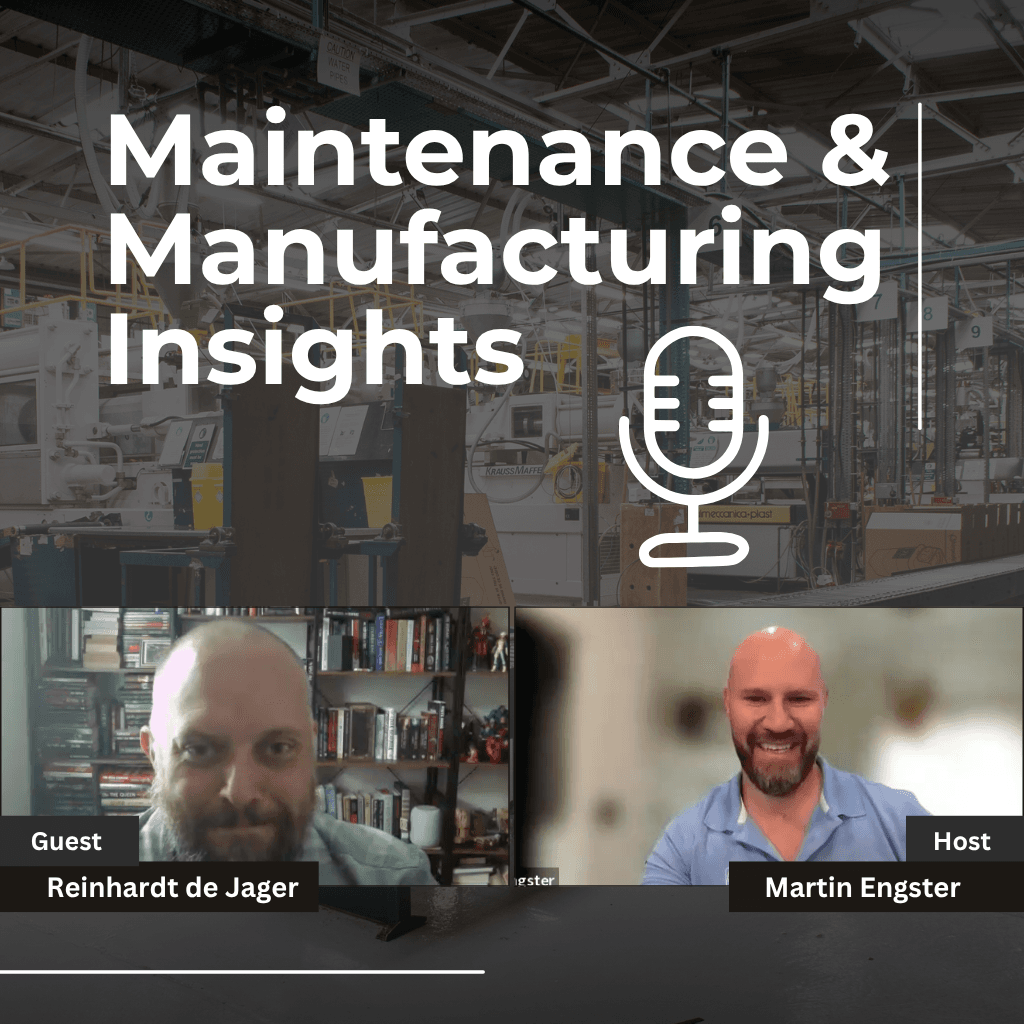
What happens when maintenance stops reacting to failures and starts getting ahead of them? That was one of the big topics I explored with Reinhardt de Jager on this episode of Maintenance & Manufacturing Insights. Reinhardt works in reliability and maintenance management, with responsibilities spanning predictive maintenance, reliability-centered maintenance, lubrication programs, shutdowns, and outages.
Moving From Reactive to Proactive
Reinhardt explained why moving from reactive to proactive maintenance starts with something as basic as the maintenance plan itself. A task that simply tells a technician to "check motor" doesn't accomplish much. Instead, he believes maintenance interactions should verify specifications, equipment condition, operating processes, and standards — while addressing the actual failure modes that put equipment at risk.
Let the Data Give You Time
One of my favorite parts of our conversation was Reinhardt's explanation of predictive maintenance. By monitoring things like vibration, temperature, and current draw, maintenance teams can spot changes before they become major failures.
And what does that give you? Time. Time to order parts, prepare the work, schedule your people, and take the equipment down when you choose — not when the machine chooses for you. That can be the difference between a planned repair lasting a few hours and an unexpected breakdown that leaves everyone scrambling.
Stop Repairing the Same Failure
We also talked about recurring problems. If your team keeps repairing the same failure, Reinhardt suggests asking a different question: Why does this keep happening? Finding and eliminating the root cause creates far more value than simply getting faster at making the same repair.
He shared a great real-world example involving an induction furnace. A condition-monitoring system detected a potentially dangerous problem shortly after a new furnace lining had been installed. His team trusted the system, shut down the furnace, investigated the warning, and found a condition that could have caused a serious safety event. That's predictive maintenance delivering value far beyond avoiding downtime.
We're All Trying to Move Steel Through the Door
One of Reinhardt's mentors gave him a lesson that changed how he thought about maintenance. His job wasn't simply to fix equipment — his job was to "move steel through the door." Reliability was his function for helping make that happen.
I think that's an important lesson for anyone in manufacturing. Maintenance, operations, safety, finance, inventory, and management may have different responsibilities, but they're all part of the same ecosystem. When those groups work together, equipment runs, production moves, and customers get what they need.
Watch & Listen
There's a lot more in this one — spare-parts strategy, vendor relationships, preventive maintenance, safety, and Reinhardt's career journey. Give it a listen: