Building PMs That Actually Prevent Failures: My Conversation with Jim Starker
On Maintenance & Manufacturing Insights, I talk with Jim Starker — Corporate Senior Asset Reliability Manager at Novolex — about why roughly 62% of OEM PM tasks don't tie to a real failure, how to rank your most critical assets, owning downtime once the work order starts, and winning back wrench time across 100-plus plants.
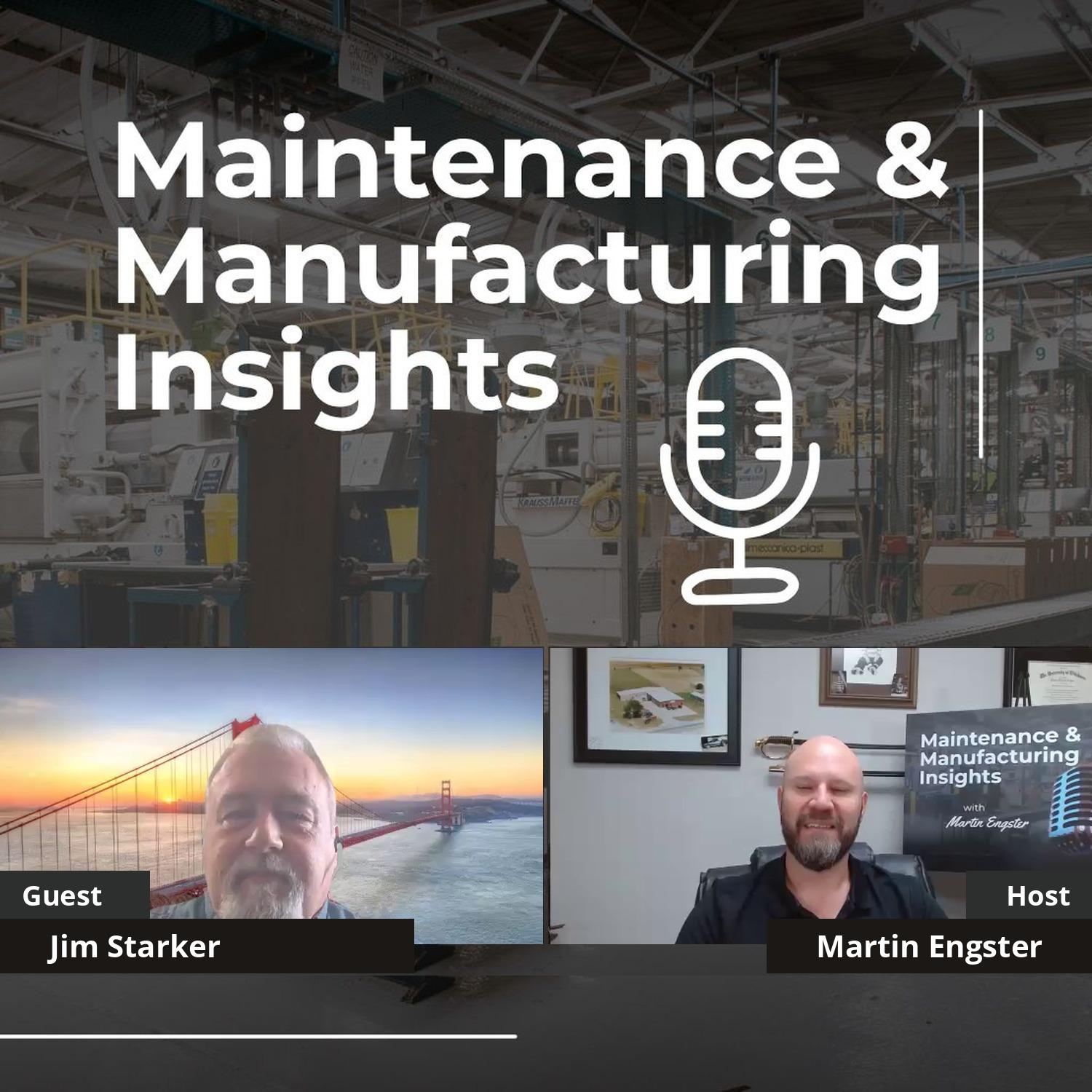
Most plants start their maintenance program with the PMs that came in the OEM manual. On this episode of Maintenance & Manufacturing Insights, I sat down with Jim Starker, Corporate Senior Asset Reliability Manager at Novolex, who made a number stick with me: about 62% of those OEM PM tasks don't tie to a real failure mode. Jim keeps roughly 103 food packaging plants running, and his whole approach is about making maintenance work actually prevent something.
One System, Down to the Component
Novolex makes things you see every day — cups, egg cartons, forks, spoons, clamshells — somewhere around 49,000 products. Resin comes in by rail car, gets heated and run through an extruder, then molded or formed and trimmed, with scrap fed back through a reclaim extruder into new pellets.
When Jim's team came together, the plants were running on eight to ten different maintenance systems. Now they're rolling out one, and they build each plant's hierarchy all the way down to the part level. As Jim put it: "We manage components, we don't manage assets."
Most OEM PMs Fall Short
This is the part worth slowing down on. Instead of trusting the manual, Jim's team looks at each component and asks how it can actually fail. Every PM then says what to check, how to check it, and what good and bad look like — and the tech records a real reading, like a gauge number. That one step stops pencil whipping, because there's a real measurement on the record instead of a checkmark.
Rank Your Assets
Not every machine earns the same attention. Jim built a simple asset criticality test with three questions: Will it hurt someone? Will it cause an environmental problem? Will it shut the plant down? The top-ranked assets get the real PMs and predictive work. On an extruder, that means vibration checks on the motor and gearbox, plus oil tests on the gearbox.
Own the Downtime, Win Back the Time
Two ideas from Jim I keep thinking about. First: maintenance should own downtime from the moment the work order starts — not before. Lost time from a slow startup shouldn't quietly get charged to the maintenance team.
Second: wrench time. A technician is paid for about 2,080 hours a year but may only be available for 1,300 to 1,500 of them, and roughly 27% of that goes to walking to the job, heading to the crib, and tracking down instructions. A planner who plans the work, schedules it, and kits the parts wins a lot of that time back.
Watch & Listen
Hear my full conversation with Jim Starker: