Fix the Fundamentals First: My Conversation with Ivan Getov
On Maintenance & Manufacturing Insights, Ivan Getov — Maintenance Excellence Manager at Eastman Chemical Company — explains why AI and predictive tools can't replace good maintenance fundamentals: moving past the reactive 'hero' mentality, building systems for the full work cycle, and remembering that maintenance is ultimately about people working together.
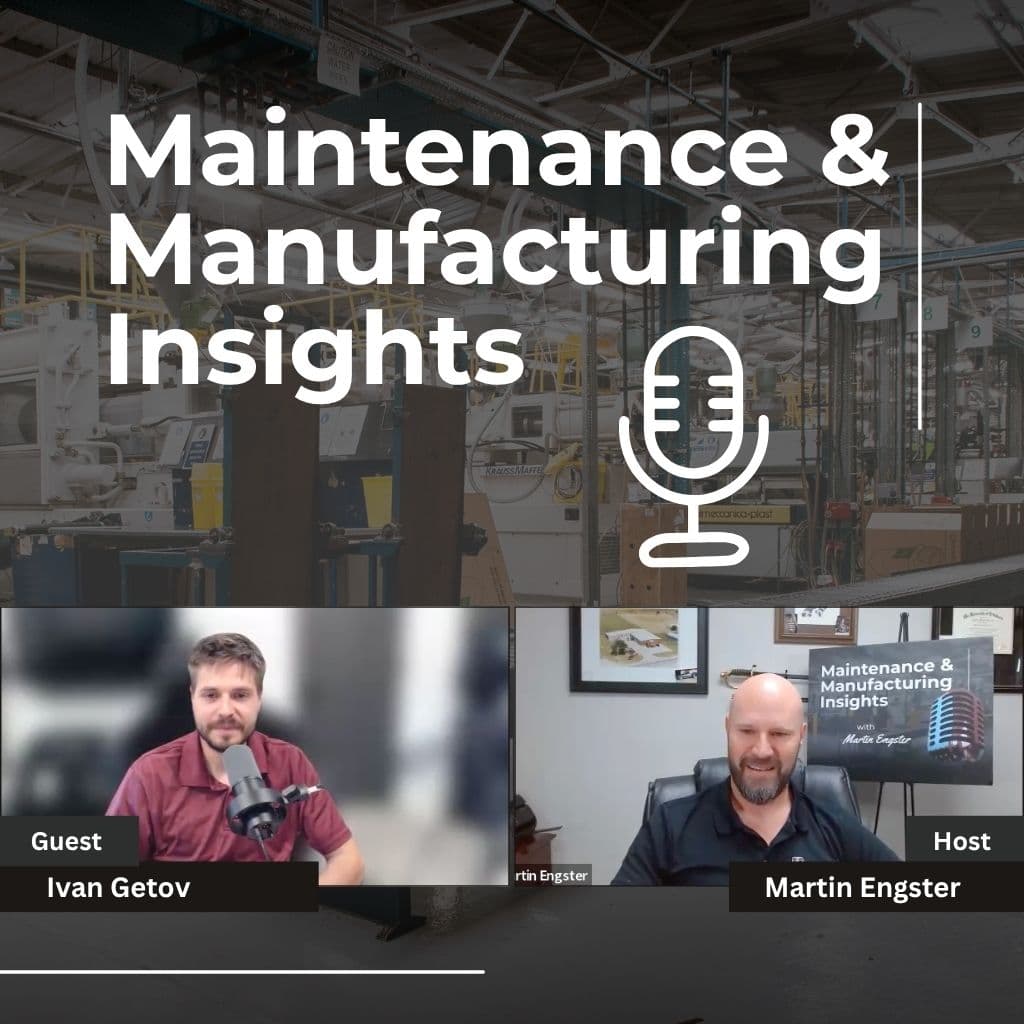
New technology can help maintenance teams accomplish amazing things. But before investing in AI, predictive tools, and the latest technology — are the fundamentals working? That was one of the big topics I discussed with Ivan Getov, Maintenance Excellence Manager at Eastman Chemical Company, on this episode of Maintenance & Manufacturing Insights.
Moving Beyond Reactive Maintenance
Ivan began his career as a chemical engineer and worked in operations before moving into maintenance. That path has given him an interesting perspective on what it takes to move an organization from reactive maintenance toward a more proactive and predictive approach.
He explained why reactive maintenance can create a "hero" mentality — something breaks, the team jumps into action, production gets running again, and everyone celebrates the save. But constantly fighting fires isn't the goal. Ivan believes companies need strong systems covering the entire maintenance cycle: from work identification and planning through scheduling, execution, and follow-up.
Fix the Fundamentals First
We also talked about predictive maintenance, vibration monitoring, analytics, and AI. Ivan is genuinely excited about these technologies — but he made an important point: technology can't replace good maintenance fundamentals.
If technology identifies a problem with a piece of equipment, someone still has to turn that information into action. The work has to be identified, planned, scheduled, and completed before the equipment fails.
Ivan shared a great real-world example: a major river-water line rupture at a continuous manufacturing operation. The team had skilled people working hard on the problem, but communication and coordination issues were costing valuable time. By establishing clear ownership, accountability, escalation procedures, and a detailed plan, the team was able to sharpen its response.
Maintenance Is About People
One of my favorite parts of this conversation was how many people are actually involved in successful industrial maintenance. It isn't just the technicians doing the repairs — operations, planners, supervisors, safety professionals, maintenance coordinators, and others all have a role. Getting everyone working together takes communication and accountability.
Ivan also shared some excellent advice for younger professionals: keep learning and stay open to opportunities. His own willingness to move from chemical engineering and operations into maintenance changed the direction of his career.
Watch & Listen
There's a lot more in this one — AI, safety, leadership, and continuous learning. Give it a listen: