Who Will Fix the Machines? My Conversation on the Trades Labor Shortage
I'm back in the guest seat on Maintenance & Manufacturing Insights — talking about a strong year in manufacturing, the year-end budget slowdown, Centerline's three legs, how we cross-train our techs, and the biggest problem in the trades: not enough people who want to work with their hands.
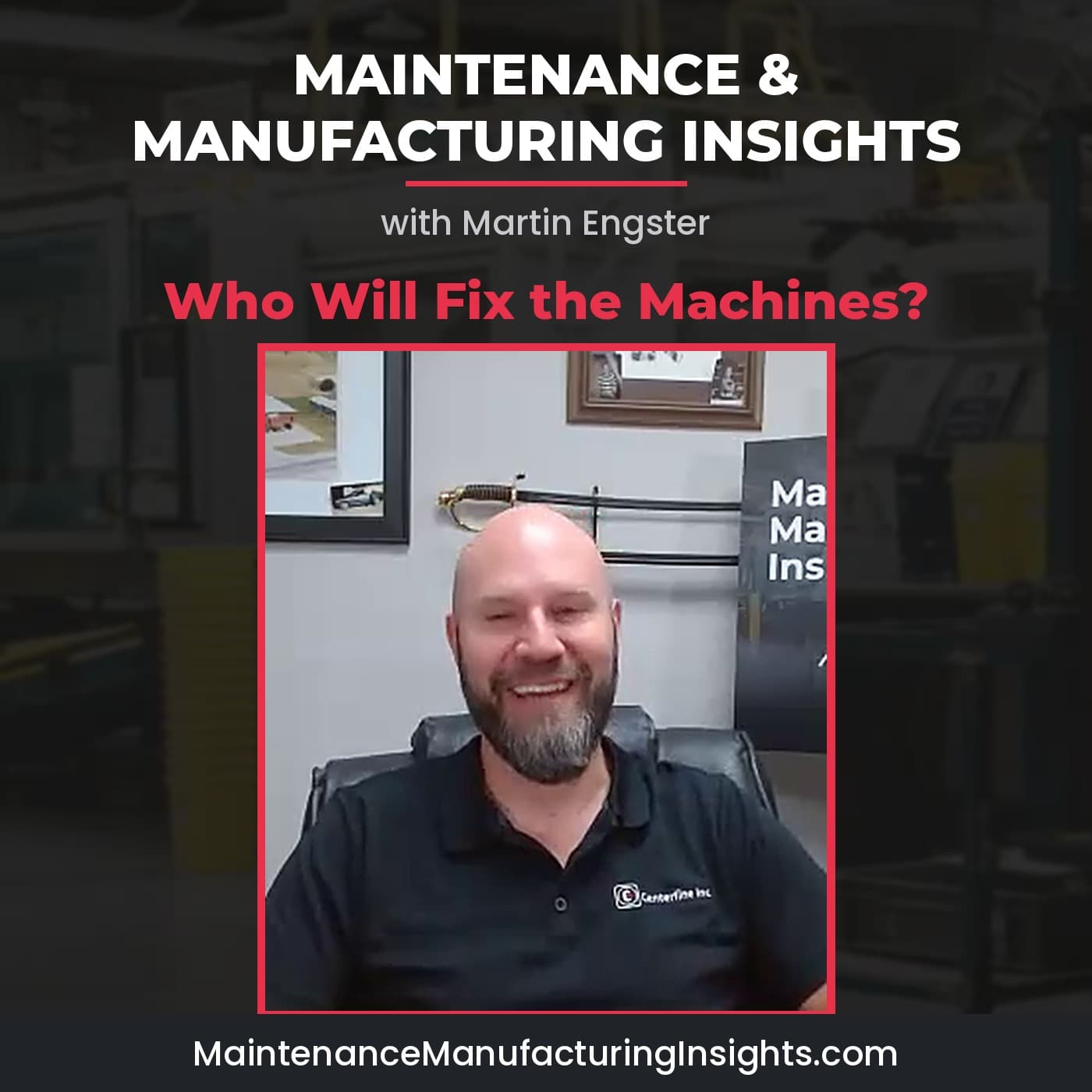
This month I'm back in the guest seat on Maintenance & Manufacturing Insights, talking about what I'm seeing in the industry and what's happening inside Centerline — including the one problem that keeps coming up across all of manufacturing: who's going to fix the machines when the skilled people retire?
A Strong Year, and the Year-End Slowdown
The year started slow, then climbed through the summer. People I talk with told me manufacturing should be up about 20% this year, and we felt it — more spindles came in for repair than normal. Now a lot of customers are near the end of their budgets, so things are starting to slow while they plan for next year. Even so, our "slow" time is still busy.
Centerline Is a Tripod
I like to say we stand on three legs. The first is spindle repair — our core work. The second is on-site taper grinding: if a spindle isn't making good parts, we can come to you and clean up the front taper to keep you running until there's time to send it in for a full repair. The third is making parts to print — that started with parts for our own repairs, and now we make parts for other companies too.
Cross-Training and the Bonus Curve
In a small, niche shop, you can't rely on one person. If the only tech who can do a certain spindle is out sick, the job sits. So we cross-train, and our techs earn a bonus as they learn harder, more complex spindles. It helps them grow, it helps us, and it means our customers aren't waiting.
One of my favorite parts of this year: a veteran who worked with my father and brother — someone I've known since I was 11 or 12 — retired, got bored, and now comes back several times a week to teach the younger guys. He has all the tricks you only learn by doing something a thousand times. Teaching the new dogs the old tricks.
The Trades Need New People
Here's the big one. A lot of young people want to work behind a computer — AI, social media, content. But we'll always need plumbers, electricians, carpenters, HVAC, and manufacturing. Social media is fun — I scroll too — but it isn't going to fix my plumbing. Many of the skilled workers we have left are near retirement.
Dave and I talked about how Germany guides kids into trade programs through the school system, while in the U.S. you often have to find that path on your own. The trades pay well and they matter. We need to make them cool again.